
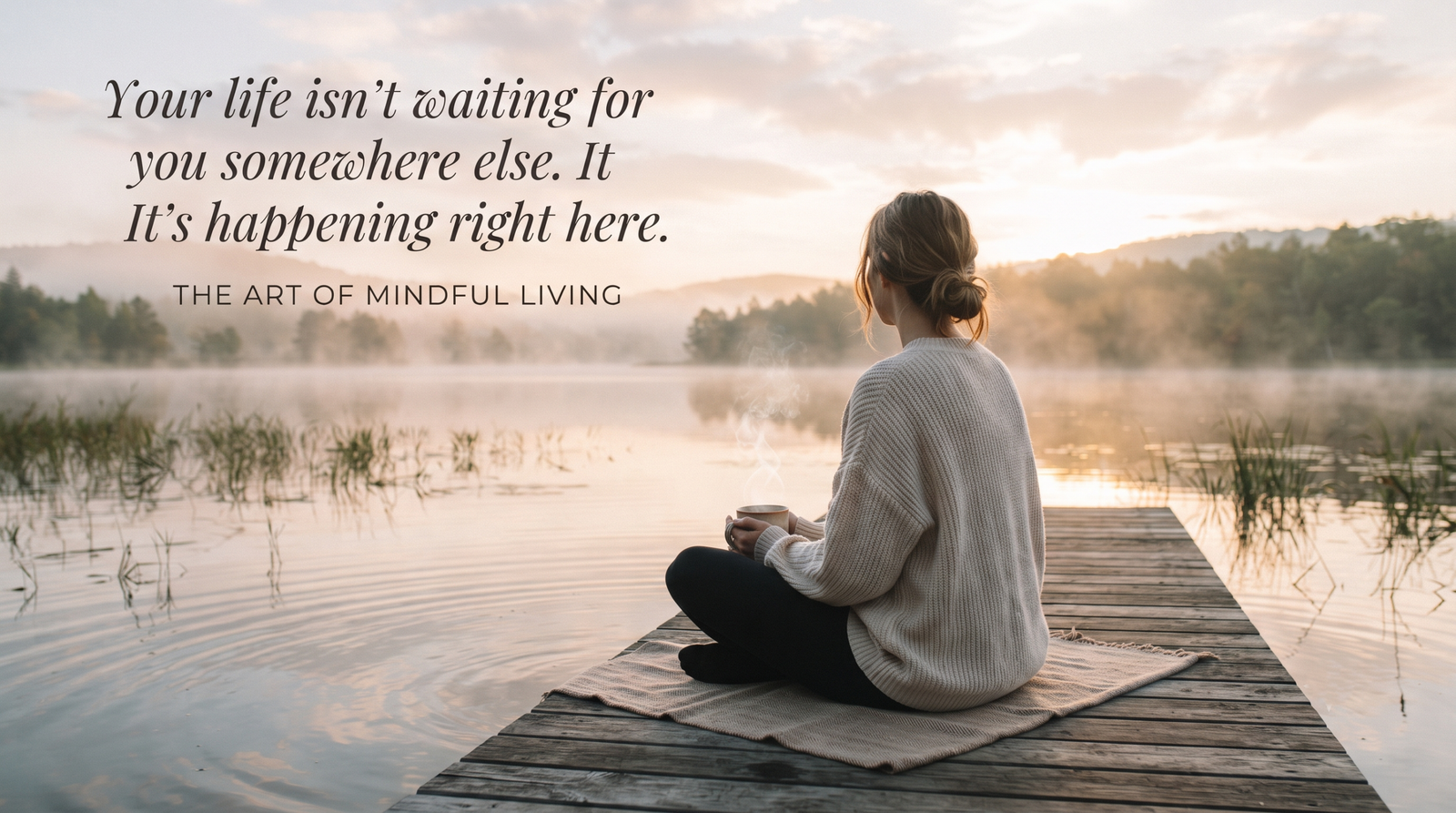
The Art of Mindful Living: Coming Back to a Life You Can Actually Feel
We talk a lot about burnout these days, but we rarely talk about the specific kind of exhaustion that comes from living entirely inside our own heads.
You know the feeling. You are sitting at the kitchen table drinking your morning coffee, but your brain is already three hours ahead, organizing an afternoon meeting, drafting an imaginary argument, or replaying something awkward you said yesterday. Or maybe you are physically present with your family, listening to someone talk, while a tiny ticker tape at the bottom of your vision reminds you of the emails waiting in your inbox and the groceries you forgot to buy.
We are technically everywhere, which usually means we are nowhere at all.
Most of us live our lives on a sort of default setting. We drive the same route to work without remembering a single turn. We scroll through our phones until our thumbs ache, not because we are looking at anything good, but because the silence feels just a little too loud. And somewhere underneath all that background noise, we get this quiet, nagging sense that life is just happening at us, rather than being lived by us.
If you are tired of running on that treadmill, you do not need to pack up your bags, delete your social media accounts, or move to a cabin in the woods. You just need to figure out how to drop back into your own skin.
What We Actually Mean When We Say “Mindfulness”
The wellness industry has done a great job of turning mindfulness into a branded aesthetic. It gets slapped on the covers of yoga journals, sold in expensive meditation apps, or treated like some mystical superpower reserved for people who can sit cross-legged for hours without scratching their nose.
Strip all of that away, and mindfulness is actually the most ordinary thing in the world.
It is just the ability to notice what is happening right now, while it is happening, without instantly needing to judge it, fix it, or run away from it.
Think about how much of your day is spent resisting reality. It is raining, and you are annoyed because you wanted sun. The line at the grocery store is moving slowly, and you are gripping your cart like it’s a personal insult. You are tired, but you stay up another two hours doom-scrolling because you feel like you didn’t get enough “me time” during the day.
Mindfulness doesn’t magically fix those annoyances. The rain still falls, the line still moves at a crawl, and you are still tired. But what changes is the internal friction. Instead of fighting reality tooth and nail, you just stop, look at what is in front of you, and exhale.
Starting Small: Reclaiming Your Mornings from the Algorithm
The tone of your entire day is usually set in the first ten minutes after you open your eyes.
If your very first instinct is to roll over, grab your phone, and flood your brain with news headlines, work notifications, and other people’s highlight reels, you have effectively handed the steering wheel of your nervous system to the outside world. Your heart rate ticks up, your shoulders creep toward your ears, and you haven’t even gotten out of bed yet.
You don’t need to wake up at 5:00 AM to do a grueling two-hour morning routine to fix this. You just need a tiny bit of friction between your eyes opening and the rest of the world demanding your attention.
-
Leave the phone across the room: Just let it sit there. You don’t need it to wake you up if you use a regular alarm clock, and you certainly don’t need it to be the first thing you touch.
-
Let your coffee or tea actually be an event: When you make your morning drink, don’t stare at a screen while you wait for the kettle to boil. Just stand there. Feel the heat of the mug. Listen to the sound of the liquid pouring. Take one real, unhurried sip before your brain starts spinning up the list of everything you have to do today.
-
Check in with your body: Before you put your feet on the floor, take three deep breaths. Notice where you are holding tension—usually it’s your jaw or your lower back. Just let those muscles soften.
It sounds ridiculously simple, but giving yourself even three minutes of un-rushed space in the morning creates a buffer. When the chaos of the day eventually hits, you won’t feel quite so fragile.
Finding the Magic in the Most Boring Parts of Your Day
The biggest excuse people use to avoid practicing mindfulness is that they simply don’t have time. Between work, family, keeping the house clean, and trying to get eight hours of sleep, who has time to sit around meditating?
Here is the secret: mindfulness isn’t an extra task you add to your to-do list. It is a completely different way of doing the things you are already doing.
Think about the chores you completely check out during. Washing dishes. Folding laundry. Brushing your teeth. Walking to your car. We treat these activities like dead time—obstacles standing between us and whatever we think is going to make us happy later.
What happens if you actually show up for them?
Try washing a batch of dishes without a podcast playing in your ear or your mind racing ahead to your afternoon schedule. Just feel the warm water on your hands. Notice the way the soap bubbles catch the light. Listen to the ceramic clinking softly against the sink. When your brain inevitably drifts off to worry about a work email, don’t beat yourself up—just notice that it wandered, and bring it gently back to the suds and the plate.
It sounds small, but when you stop treating daily life as an inconvenience to be rushed through, something strange happens. The background anxiety starts to quiet down. You realize that your life isn’t waiting for you in some distant future when all your problems are finally solved. It’s right here, in the kitchen sink.
What to Do When Everything Goes Sideways
It is easy to feel peaceful when you are sitting alone in a quiet room with a hot cup of tea. The real test of any mindset shift comes when you are stuck in gridlock traffic, a project completely tanks at work, or you find yourself in the middle of a frustrating argument.
In those moments, your biology takes over. Your chest tightens, your breathing gets shallow, and your brain screams at you to either fight back, run away, or shut down completely. This is where most of us say things we regret or make snap decisions that make the mess even bigger.
Mindfulness doesn’t stop those triggers from happening. But it gives you a tiny, crucial fraction of a second between the thing that happens and how you decide to react to it.
When you feel that familiar spike of panic or anger, try this:
-
Name it quietly: Just say to yourself, “Oh, look, frustration is here,” or, “I’m feeling really overwhelmed right now.” Just naming the feeling takes away some of its teeth. You aren’t the anger; you are the person noticing the anger.
-
Drop your shoulders: Literally. When we stress, our bodies hunch up. Force your shoulders down, unclench your jaw, and take one deliberate breath down into your stomach.
-
Ask a better question: Before you snap back at someone or rush into a panic-driven fix, pause for three seconds and ask yourself: “Is what I’m about to do actually going to help this situation?”
Most of the time, the answer is no. And just catching that in real-time saves you hours of clean-up later.
Putting the Phone Down and Coming Back to Reality
Let’s be honest: we are all a little bit addicted to our screens, and it is making us miserable.
Our phones are engineered from the ground up to keep our brains in a state of continuous partial attention. Every notification is a tiny hit of cheap dopamine that pulls us out of the room we are actually sitting in. We check our feeds out of sheer habit because the present moment feels just a little too quiet, a little too empty, or slightly uncomfortable.
If you want a clearer head, you have to draw some hard lines around your attention:
-
Make certain spaces sacred: Keep the dining table and the bedroom phone-free zones. You will be amazed at how much better conversations flow when nobody is checking their pocket every ninety seconds. And leaving your phone out of the bedroom does wonders for your sleep quality.
-
Stop trying to multitask: The human brain is terrible at doing two things at once—we aren’t actually multitasking, we are just switching back and forth really fast, which leaves us fried and unfocused. Write your email with all other tabs closed. Watch a movie without holding your phone.
-
Be okay with being bored: Boredom isn’t an emergency. It’s just space. When you stop filling every single empty gap with a screen, your mind finally gets the room it needs to breathe, wander, and actually rest.
Give Yourself Permission to Mess It Up
The quickest way to kill your motivation for mindfulness is to treat it like a test you are trying to pass.
You’ll try to stay present, your mind will wander off to think about groceries or an awkward thing you said in 2018, and you’ll immediately think, “Ugh, I’m bad at this. I can’t even meditate for two minutes.”
Here is the most important thing to know: Your mind wandering isn’t a failure. It is literally what brains do.
Expecting your brain to stay completely blank and quiet is like expecting your heart to stop beating or your lungs to stop pulling in air. Thoughts are just mental weather. They come and go.
Mindfulness isn’t about stopping the thoughts; it’s about what happens after you notice you’ve gotten lost in them. Every single time you realize your mind has drifted off, and you gently bring it back without yelling at yourself inside your head—that is the whole practice. That is where the actual benefit lives.
Be gentle with yourself. Treat your attention like a distracted puppy. You don’t scream at a puppy when it runs off; you just calmly call it back, hook it to the leash, and keep walking.
You Don’t Have to Change Everything Today
The art of mindful living isn’t a final destination. There is no finish line where you suddenly become a perfectly zen person who never gets stressed out or annoyed by traffic.
It is just a practice of coming home, over and over again, to the only moment you actually have any control over: right now.
When you close this tab and go back to whatever is waiting for you, don’t try to overhaul your whole life by tonight. Just pick one tiny thing. Take three slow breaths before you start your car. Actually taste your afternoon tea instead of chugging it while staring at a monitor. Feel the solid ground beneath your shoes as you walk down the hallway.
Your life is happening right here, in the small, quiet spaces between your thoughts and the rhythm of your breath. Don’t let it slip past while you’re busy waiting for something else to begin. Take a deep breath, and welcome yourself back to it.